There are some things in life that you don't simply achieve.
You receive them.
You care for them.
You learn them.
You grow with them.
And somewhere along the way, you realize:
This is valuable enough for me to steward.
I learned that long before I had language for it.
I became a mother at 22.
By the time I was 30, I had four children.
Four.
Going from two children to four children almost overnight will introduce you to responsibility real quick.
No pressure, right?
Woo!
But somewhere underneath all of that responsibility was something else.
Honor.
I remember looking at my children and thinking, in my own way:
God must really trust me.
Because these children were valuable.
They were precious.
And if I had been entrusted with something this valuable, then I had a responsibility to care for what had been placed in my hands.
Not own them.
Steward them.
There is a difference.
Stewardship Is Not Ownership My children were never extensions of me that I got to shape into whatever I wanted them to become.
They were people.
Different people.
Different personalities.
Different needs.
Different strengths.
Different ways of seeing the world.
And being their mother required me to pay attention.
Protect them.
Nurture them.
Teach them.
Make room for them to grow.
Learn who they were becoming.
And keep paying attention instead of assuming that because I knew what they needed in one season, I automatically knew what they would need in the next.
Was I a perfect mother?
Absolutely not.
But I loved them enough to keep learning them.
And as they grew, the assignment changed.
Little children needed one version of me.
Teenagers needed another.
And eventually, those children became adults.
They didn't stop being my children.
I didn't stop loving them.
But stewardship had to change form.
Today, there are times when my role looks less like managing the details of their lives and more like being a place they know they can return to.
Sometimes they want my opinion.
Sometimes they don't.
Welcome to adult children.
But I can still offer wisdom when they ask for it.
I can still offer love.
I can still offer strength.
I can still hold space.
I can still be Mom.
Same love. Different assignment.
That's stewardship.
The value didn't disappear because the season changed.
The way I cared for what I valued had to evolve.
And that's true of more than parenting.
It's true of the things we build.
And it's true of the victories we work so hard to achieve.
Sometimes the Victory Changes the Assignment For a long time, weight loss was something I wanted.
Then I experienced significant weight loss.
More than 115 pounds.
That's a victory.
I'm not going to stand here and pretend it wasn't.
I'm not going to make it smaller so I can appear humble.
And I'm not going to rush past it because there was still more to learn.
It mattered.
But losing the weight did not end my relationship with my body.
It changed the assignment.
My weight-loss surgery was part of my personal medical journey. It was the decision I made with my healthcare team for my body and my circumstances.
It is not a prescription for yours.
But after surgery, I had something new to learn:
How do I live in and care for this body now?
The procedure did not remove my responsibility to learn my body.
It gave me a different body experience to steward.
I had postoperative instructions.
I had nutritional guidance specific to my care.
I had things my medical team told me would require ongoing attention.
I needed rest.
I needed support.
I needed community.
And I had to take those things seriously.
Not because I needed to live afraid that I would lose what I had achieved.
Because what I had achieved was valuable enough to care for.
A Victory Can Be Real and Still Need Care Sometimes we treat achievement like the finish line.
I did it.
Check.
What's next?
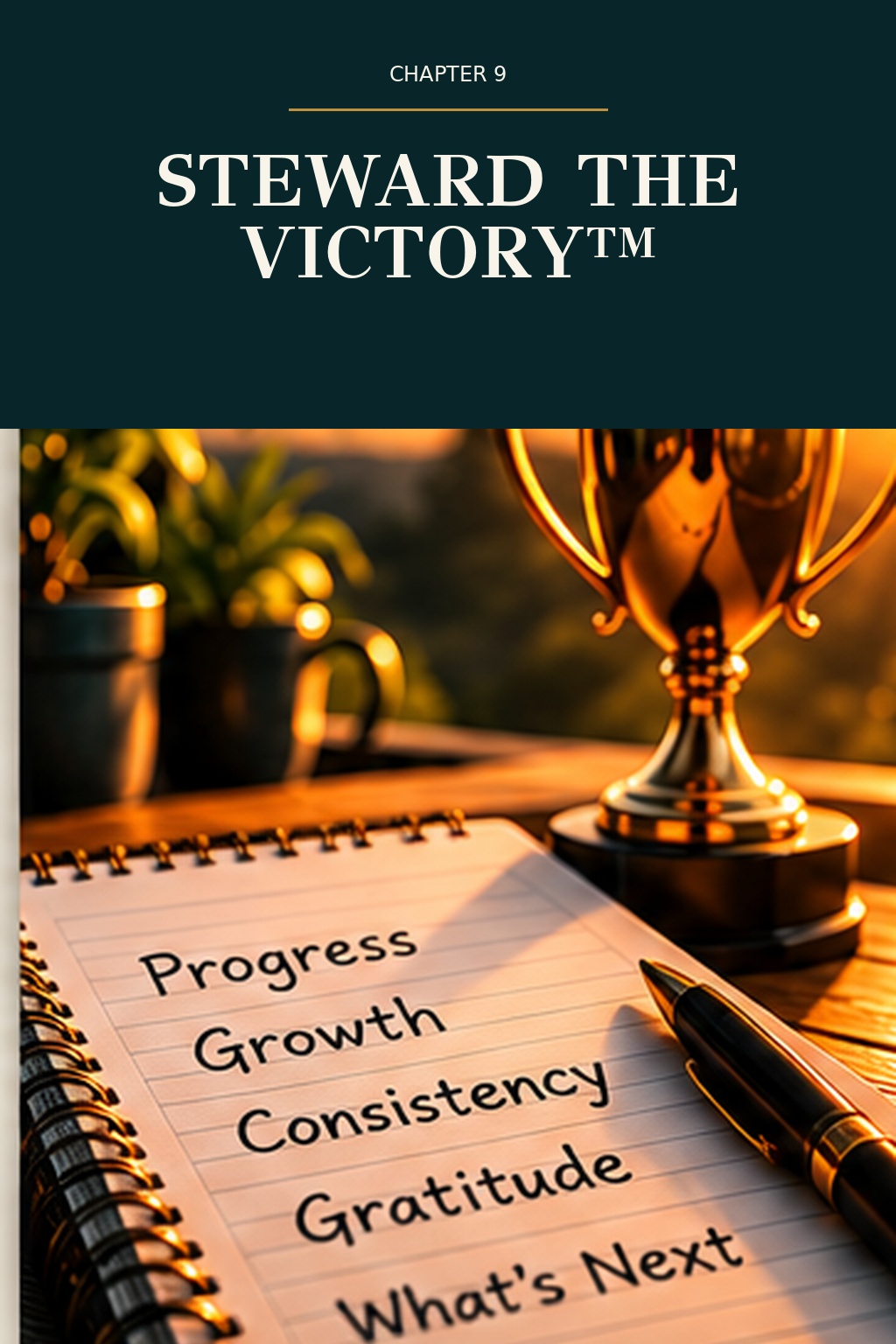
But some victories aren't trophies you put on a shelf.
They're living things.
They require attention.
And that can be difficult in a culture that loves the dramatic part of transformation.
The before.
The after.
The reveal.
The number.
The big moment.
But what about Tuesday three years later?
What about five years later?
What about when the body changes again?
What about when the life around the victory changes?
That's where stewardship lives.
A victory can be real and still need continued care.
Continued care doesn't diminish the victory.
It honors it.
Stop Moving the Finish Line Long Enough to See What You've Built There is another way we can mishandle a victory.
We can refuse to count it.
We achieve something and immediately say:
Yeah, but...
Yeah, but I still have more weight to lose.
Yeah, but I only did it three times.
Yeah, but I should be further along.
Yeah, but somebody else did more.
Yeah, but now I need to...
Hold on.
We have met this but before.
Apparently, it followed us into another chapter.
Before you explain away the victory, can you tell the truth about it?
You did something.
Something changed.
Something is working.
Something has been built.
Name it.
You don't have to exaggerate it.
You don't have to pretend you've arrived at some permanent destination.
You don't have to turn every small success into a life-changing breakthrough.
But you also don't have to make what you've accomplished disappear because you're already looking for the next thing.
Sometimes growth looks like reaching for something new.
And sometimes:
Growth looks like taking care of what is already working.
The Searchlight Isn't Only Looking for Problems I don't want you to accidentally turn the Searchlight into something that only comes out when something is wrong.
The Searchlight is not a prosecution light.
It can find what works too.
That matters.
Because if all you ever investigate is what's wrong,
you can become very skilled at identifying problems while remaining almost blind to your own progress.
So when something works, shine the light there too.
Ask:
What is working here?
What helped this work?
What have I built that I don't want to overlook?
And then ask the stewardship question:
What does what I've built need from me now?
Not:
What else can I accomplish?
Not:
How can I make this more impressive?
Not:
How do I make sure nothing ever changes?
What does what I've built need from me now?
That question has served me in ways I didn't understand when I first began this journey.
When My Body Needed Something Different Over time, my body continued to change.
My health circumstances changed.
And there came a point when I knew I needed to bring the Searchlight back to what I was experiencing.
I didn't need to diagnose myself.
I needed to pay attention.
So I returned to my healthcare professionals.
There were things happening in my body that required a different conversation and additional medical guidance.
Part of that process included learning more about obesity as a chronic disease rather than treating every change in my weight as a character verdict.
That information mattered to me.
It changed the way I understood what I was experiencing and the questions I was willing to ask about my care.
Eventually, based on my individual circumstances and the recommendations I received from my healthcare professionals, I chose to add GLP-1/GIP-based treatment to my own medical journey.
Again:
My treatment is not your prescription.
Your body, medical history, circumstances, goals,
risks, and treatment options belong in conversation with qualified healthcare professionals who know your individual situation.
I'm telling you what happened in my life because the decision taught me something about stewardship.
I could have looked at the changes happening in my body and decided:
I failed.
Instead, I had learned to look.
Something had changed.
So I needed new information.
And with new information, I could make a new decision about how to care for what I had already worked so hard to build.
I wasn't starting over.
I was stewarding.
Stewardship Pays Attention Stewardship doesn't hold something so tightly that it can never change.
It cares enough to keep paying attention.
That's what I learned as my children grew.
And that's what I continue learning with my body.
What something needed from me five years ago may not be exactly what it needs from me today.
That doesn't mean the commitment disappeared.
It means the assignment evolved.
So I keep asking:
What is true now?
What is working now?
What needs care now?
What have I learned?
What does this victory need from me in this season?
Sometimes there is another goal.
Sometimes there is another change you genuinely want or need to make.
But sometimes the work in front of you is learning how to live inside something you once prayed for,
worked for, sacrificed for, or desperately wanted.
Don't rush past that.
Steward it.
Steward the Victory™ Now bring this into your life.
Think about something you've built during this journey.
It doesn't have to look like my victory.
It doesn't have to involve a certain number on a scale.
Maybe you've created a routine that finally fits.
Maybe you've become more consistent with movement.
Maybe you're preparing food differently.
Maybe you're sleeping differently.
Maybe you're keeping medical appointments you once avoided.
Maybe you've learned to ask better questions.
Maybe you're recovering faster when something doesn't go according to plan.
Maybe the victory is simply that you're no longer speaking to yourself the way you used to.
Whatever it is, start here.
1. NAME IT What is working?
What have you actually built?
REFLECTION
Tell the truth about the victory without shrinking it and without exaggerating it.
2. VALUE IT Why does this matter to you?
What has this changed?
What does this victory make possible that wasn't possible before?
Let yourself recognize its value.
3. CARE FOR IT What does this need from you now?
Attention?
Support?
Continued practice?
Professional guidance?
Rest?
Boundaries?
Preparation?
Something else?
Don't automatically assume that more is the answer.
Ask what care looks like.
4. KEEP PAYING ATTENTION What worked in one season may need a different expression in another.
Stay curious.
Keep the Searchlight available.
Notice when circumstances change.
Notice when your needs change.
Notice when the victory itself begins asking something different of you.
What do you need to keep paying attention to?
5. LET THE ASSIGNMENT EVOLVE You don't have to hold the victory exactly the way you first achieved it.
Sometimes stewardship means protecting.
Sometimes it means continuing.
Sometimes it means learning.
Sometimes it means asking for help.
Sometimes it means allowing the way you care for something to grow as you grow.
Same value. Different assignment.
What might caring for this victory look like in the season you're in now?
You Don't Have to Keep Winning the Same Victory Some of us have spent years trying to prove ourselves by winning the same victory over and over again.
Lose the weight again.
Restart the routine again.
Get disciplined again.
Become motivated again.
Monday.
Again.
Again.
Again.
But what if the next assignment isn't proving that you can achieve it again?
What if it's learning how to care for what you've already built?
What if success isn't always another dramatic transformation?
What if sometimes success sounds like:
This is working.
I recognize it.
I value it.
I'm paying attention to it.
And I'm willing to give it what it needs in this season.
That's stewardship.
Achievement doesn't always end the responsibility.
Sometimes achievement changes the responsibility.
And there is honor in that.
But even something you value, care for, practice,
and steward is eventually going to meet something none of us can completely control.
Life.
Something unexpected will happen.
A schedule will change.
A difficult season will come.
A plan will get interrupted.
And when it does, you do not have to turn one interruption into another beginning.
You don't have to burn down the whole playbook.
You need to know what to do next.
Keep the Searchlight.
We're going to need it.
It's time to run the next play.
Ready to put this chapter to work?